Call: 713-850-8466
Deep root feeding is a proven technique for strengthening trees, especially in urban areas like Houston where compacted soil and limited nutrients can hinder growth. This process involves injecting a nutrient rich liquid fertilizer directly into the root zone, ensuring trees absorb vital nutrients and moisture more effectively.

Trees are one of the most valuable assets in any landscape. They provide shade, improve property value, reduce energy costs, and enhance the beauty of your home or business. However, many trees struggle to get the nutrients they need due to compacted soils, construction activity, drought, and the challenges of urban environments. That's where deep root feeding can make a significant difference.
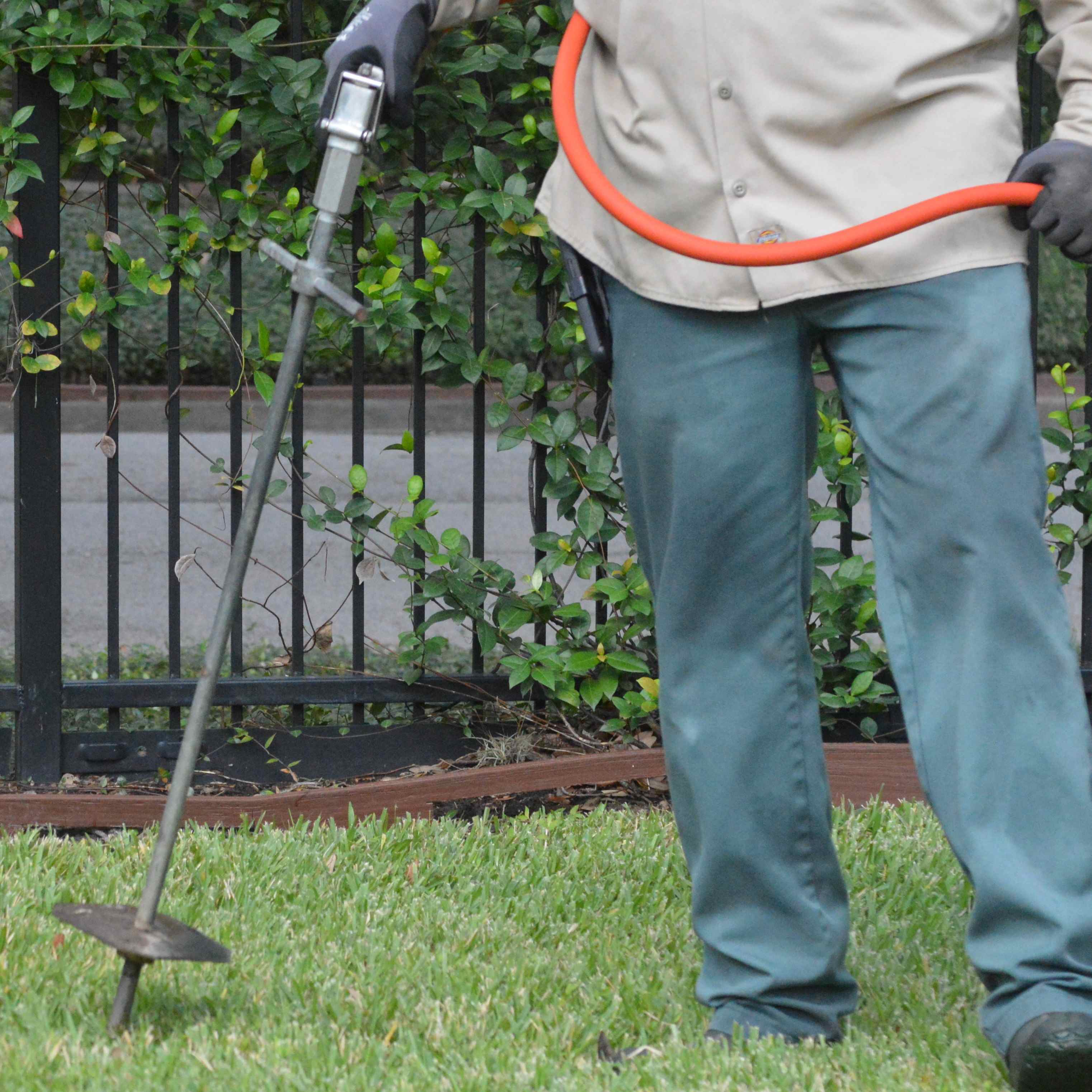
Deep root feeding is a specialized tree care treatment that delivers nutrients directly into the root zone where trees absorb water and essential minerals. Using professional equipment, a nutrient-rich solution is injected beneath the soil surface, bypassing turfgrass competition and ensuring the tree receives the resources it needs to thrive.
Unlike surface fertilization, deep root feeding places nutrients exactly where they are most beneficial, at the roots. This method promotes stronger growth, healthier foliage, and improved overall tree vitality.
Healthy roots create healthy trees. Deep root feeding supplies essential nutrients directly to the root system, stimulating growth and improving overall vigor. Trees often respond with denser canopies, richer foliage color, and increased resilience to environmental stressors.
Texas weather can be unpredictable, with periods of excessive rainfall followed by extended drought. Deep root feeding encourages stronger, deeper root systems that can better access available moisture in the soil. As a result, treated trees are often better equipped to withstand dry conditions and recover more quickly from water stress.
Trees experience stress from many sources, including construction activity, root damage, severe weather, soil compaction, and prolonged drought. Deep root feeding provides the nutrients necessary to support recovery and stimulate new root growth. This can be especially beneficial for trees showing signs of decline or those recovering from storm damage.

Just like people, healthier trees are better able to defend themselves. Proper nutrition strengthens a tree's natural defense systems, making it less susceptible to insect infestations and certain diseases. While deep root feeding is not a cure for existing problems, it can help reduce vulnerability and improve a tree's ability to cope with future challenges.
Many urban soils become compacted over time, limiting oxygen and water movement to the roots. Deep root feeding helps alleviate some of these conditions by creating injection points throughout the root zone, improving soil aeration and encouraging healthier root development. For severely compacted soil, air spading can further restore oxygen and water flow around the roots.
While nearly any tree can benefit from supplemental nutrition, deep root feeding is especially valuable for:
Our certified arborists understand that up to 80% of a tree's health is determined by the condition of its root system, which is why targeting the roots directly is so critical.
Not all fertilization programs are created equal. Proper tree nutrition requires an understanding of tree biology, soil conditions, species-specific needs, and local environmental factors.
Our certified arborists utilize professional-grade equipment and science-based nutrient formulations designed specifically for Houston-area soils and growing conditions. Every treatment is tailored to the needs of your trees, ensuring they receive the right nutrients at the right time. Pairing deep root feeding with routine tree maintenance keeps that health on track season after season.
Deep root feeding is one of the most effective preventative maintenance services available for trees. By supporting root health, improving nutrient availability, and increasing resilience to stress, this treatment helps protect your landscape investment and extend the life of your trees.
Healthy trees don't happen by accident, they require proper care below the surface where it matters most.
Since 1979, our mission has been simple: care for every tree as if it were our own, and deep root fertilization is one of the most effective ways to strengthen your trees from the ground up.
If your trees are struggling with drought stress, construction impacts, compacted soil, or simply need a nutritional boost, deep root feeding can help. Contact Tree Care, Inc. today to schedule an evaluation and learn how our professional tree health care services can keep your trees thriving for years to come.
For most Houston trees, once or twice a year is the sweet spot, typically in spring to fuel the growing season and/or fall to strengthen roots heading into winter. Stressed, newly planted, or construction-impacted trees may benefit from more frequent treatment. The right schedule depends on the tree's species, age, and condition, so we tailor it to each tree rather than applying a one-size-fits-all program. Pairing it with routine tree maintenance keeps trees on track year-round.
For trees, yes, and it's not close. Surface fertilizer mostly feeds the turfgrass competing with your tree, and much of it never reaches the root zone. Deep root feeding injects a nutrient-rich solution beneath the surface, placing nutrients exactly where the tree absorbs them. That means stronger growth, healthier foliage, and better resilience for the same investment.
It's a gradual, below-the-surface process rather than an overnight fix. Many trees respond over the following weeks and months with denser canopies, richer foliage color, and improved vigor, with the biggest gains showing across the next growing season as the root system strengthens. It's preventative care that compounds over time, not a same-day cure.
It can often help; deep root feeding supplies the nutrients a stressed tree needs to recover and push new root growth, which is especially valuable after construction damage, drought, or storms. That said, it's not a cure for an existing disease or structural problem. If a tree is in visible decline, the smartest first step is an evaluation to find the real cause. Reach out to our team, and an ISA Certified Arborist can assess what's going on before treatment.
Looking to learn more about tree resources? Check out our tree resources page for tips, guides, and expert advice on keeping your trees healthy and safe.