Call: 713-850-8466

Fire blight is one of the most destructive bacterial diseases affecting ornamental trees in Houston — particularly the widely planted Bradford pear (Pyrus calleryana). Caused by the pathogenic bacterium Erwinia amylovora, this disease infiltrates the tree's vascular tissues, rapidly spreading through blossoms, shoots, and branches. Because infection often begins during bloom, symptoms typically appear in late spring, making vigilance crucial during this period.
Fire blight is caused by Erwinia amylovora, a gram-negative bacterium that thrives in warm, humid environments — conditions Houston experiences regularly. The bacterium overwinters in cankers and becomes active when temperatures rise, producing ooze droplets teeming with bacteria. These droplets are then spread by wind, rain splash, bees, and other insects visiting the flowers.
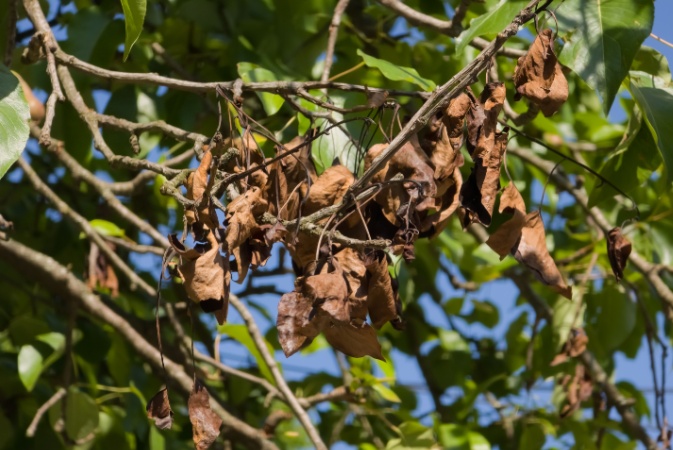
Fire blight gets its name from the characteristic "burned" appearance it causes on infected tissues. Symptoms include:
Bradford pears, while once prized for their abundant blooms and uniform shape, are highly susceptible to fire blight due to their dense branching and fast, vigorous growth. Rapid growth creates soft new tissues — prime entry points for bacterial infection. Their structural weaknesses and narrow branch angles also make them prone to breakage once disease spreads.
Because fire blight is a bacterial disease, management focuses on sanitation and reducing conditions that encourage infection:
Tree specialists can help distinguish fire blight from environmental scorch or fungal infections, identify cankers, recommend replacement options, and ensure proper pruning practices are followed. Their early detection and targeted interventions can greatly reduce disease spread, especially in properties with multiple susceptible trees.
Erwinia amylovora was the first plant pathogen ever identified as a bacterium back in the 1880s — making fire blight the first scientifically recognized bacterial plant disease in history. Its discovery helped launch the entire field of modern plant pathology.
Fire blight targets plants in the Rosaceae family — like pear, apple, quince, hawthorn, crabapple, and even some ornamental shrubs.
Infected branches turn dark and shriveled as if scorched by fire — hence the name fire blight.
Because pruning during wet conditions can spread the disease further, arborists purposely wait for dry periods to trim infected wood.
Looking to learn more about tree resources? Check out our tree resources page for tips, guides, and expert advice on keeping your trees healthy and safe.