Call: 713-850-8466
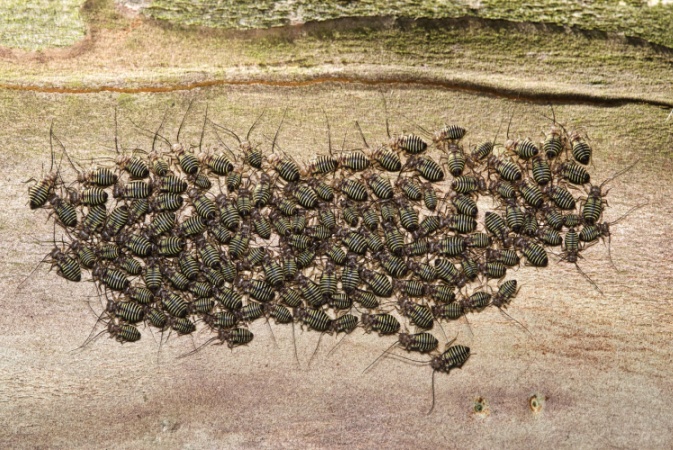
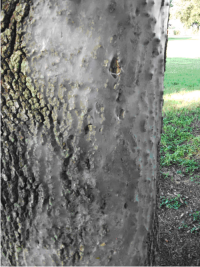
If you've noticed silky white webbing covering the trunk of a tree, don't panic. While it may look alarming at first, it's often caused by bark lice — harmless insects that actually play a beneficial role in your landscape.
Bark lice (also called Psocids) feed on algae, fungi, lichen, and other organic material growing on the bark. Think of them as nature's cleaning crew, helping keep the bark surface clean without harming the tree itself.
Homeowners are often surprised to wake up in late summer and find tree trunks wrapped in a thin layer of white webbing, almost as if someone decorated the tree overnight for Halloween.
This unusual sight is commonly called the “Ghost Web” phenomenon. The webbing serves as a protective covering for colonies of bark lice while they feed and move across the bark surface. Although it may look dramatic, it is completely harmless to the tree and typically disappears within a few weeks.
No. Bark lice do not feed on the tree, bore into the wood, or damage healthy bark. In fact, their presence is often associated with a thriving natural ecosystem.
These insects are most commonly found in environments with adequate moisture and abundant organic growth on the bark. Seeing bark lice can actually be an indication that your landscape supports a healthy balance of beneficial organisms.

Bark lice themselves are not a problem, but a sudden increase in their numbers may sometimes draw attention to underlying environmental conditions such as:
While the insects are not causing these issues, they may be taking advantage of conditions that encourage algae and fungal growth on the bark.
In most cases, the best approach is to leave bark lice alone. They will naturally move on once their food source is depleted.
To keep your trees healthy:
If you notice declining foliage, dieback, or other signs of tree stress in addition to bark lice activity, an ISA Certified Arborist can help determine whether an underlying issue needs attention. Reach out to our team, and we'll take a look.
Bark lice may look unusual, but they're more friend than foe. Their presence is often a sign of a healthy, functioning ecosystem — and that mysterious white webbing is usually just nature's way of reminding us that even the smallest creatures have a job to do.
No. Silky white webbing on a trunk is almost always bark lice — harmless insects that clean algae, fungi, and lichen off the bark and then move on within a few weeks. They don't feed on the tree, bore into the wood, or damage healthy bark, so there's nothing to treat. If you're seeing the webbing alongside declining foliage or dieback, though, that points to a separate stress issue worth a professional look.
The honest answer is that you don't need to — and you're better off not trying. Bark lice leave on their own once they've finished feeding, and the “ghost web” disappears with them within a couple of weeks. Pesticides do more harm than good here, since they can wipe out the beneficial organisms bark lice are part of. The best thing you can do is support overall tree health with deep watering and good soil care.
Usually the opposite — bark lice thrive where there's good moisture and plenty of organic growth, so their presence often signals a healthy, balanced bark ecosystem. That said, a sudden spike can occasionally draw attention to underlying stress like drought or soil compaction. If your tree also looks stressed, a routine inspection can tell you whether anything below the surface needs attention.
Bark lice alone don't warrant a call. But if you spot them alongside thinning or discolored foliage, branch dieback, or dead limbs, those are signs of a deeper problem the bark lice are simply taking advantage of — and dead or hazardous limbs may need professional trimming to keep the tree safe. In that case, contact our team, and an ISA Certified Arborist can evaluate what's really going on.
Looking to learn more about tree resources? Check out our tree resources page for tips, guides, and expert advice on keeping your trees healthy and safe.